Introduction
For many new parents, the first few months of a baby’s life can feel like one long, sleepless night. Waking every hour, rocking until your arms ache, and wondering if your little one will ever settle into a rhythm—this is a reality most families face. The lack of sleep doesn’t only affect the baby; it impacts the whole household. Parents often struggle with fatigue, stress, and even relationship strain when nights are disrupted, which is why many turn to baby sleep training as a solution.
But here’s the good news: babies can learn how to sleep for longer stretches at night, and parents can guide them through gentle, structured methods known as baby sleep training. Contrary to myths, sleep training is not about letting babies “cry it out” endlessly. It’s about teaching them the skills to self-soothe, fall asleep independently, and stay asleep.
In this guide, we’ll break down the science of infant sleep, share proven sleep training methods, highlight common mistakes to avoid, and answer frequently asked questions. Whether you’re a first-time parent or simply struggling with bedtime routines, this step-by-step approach will give you the tools to help your baby (and yourself) finally rest peacefully.
Section 1: Understanding Baby Sleep Cycles
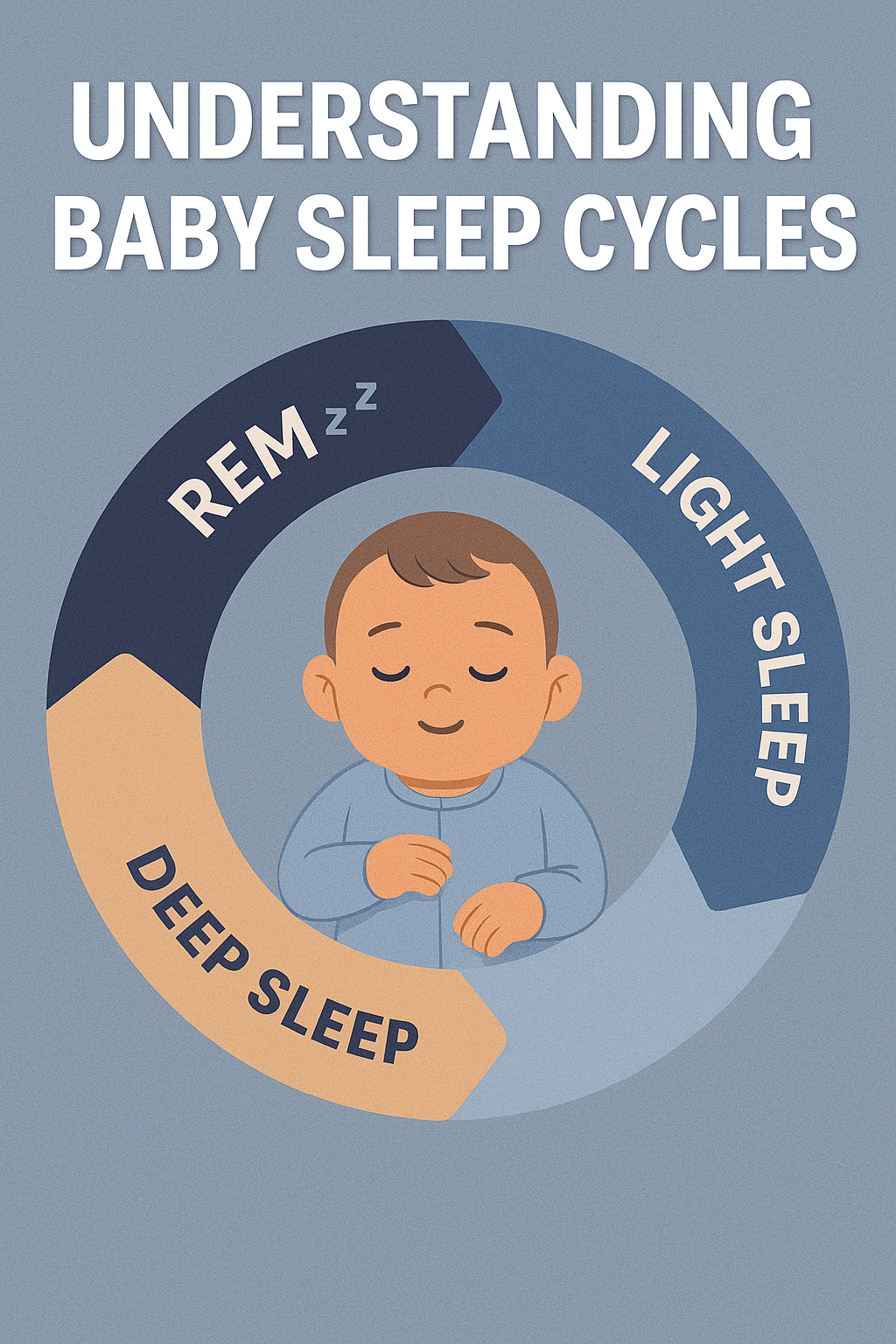
- Babies sleep very differently from adults. While adults typically move through a 90–120-minute sleep cycle, infants have shorter cycles of about 50–60 minutes. This means they wake more frequently, especially during the early months.
Key facts about infant sleep:
- Newborns (0–3 months): Sleep 14–17 hours in total, divided into multiple naps around the clock. They rarely sleep more than 2–3 hours at a time.
- Infants (4–6 months): Begin to consolidate sleep, often needing 12–15 hours in a day, with 2–3 longer naps and stretches of night sleep.
- Older babies (6–12 months): Usually need 11–14 hours of sleep per day, including 1–2 naps.
- Why is this important? Babies spend a larger percentage of their time in REM sleep (light sleep), which is critical for brain development and memory. But it also makes them more prone to waking up at the slightest sound or discomfort.
- Understanding these natural sleep patterns helps parents set realistic expectations and choose the right time to start sleep training.
Section 2: Signs Your Baby Is Ready for Baby Sleep Training
Not all babies are ready for baby sleep training at the same age. While some begin to self-soothe by 3–4 months, others may need more time. Here are the clearest signs your baby might be ready:
- Age range of 4–6 months: At this stage, babies usually no longer need to feed every 2 hours at night, making sleep training more effective.
- Steady growth and weight gain: A healthy weight and consistent pediatric checkups indicate your baby can handle longer stretches of sleep without constant feeding.
- Ability to self-soothe: If your baby sucks their thumb, cuddles a blanket, or finds ways to comfort themselves, they are developmentally ready.
- Parental readiness: Sleep training requires patience and consistency. Parents must feel emotionally prepared to stick to the chosen method.
⚠️ Always consult your pediatrician before starting, especially if your baby was born prematurely or has medical concerns.
Section 3: Proven Baby Sleep Training Methods
There isn’t a “one-size-fits-all” method. The right approach depends on your baby’s temperament and your parenting style. Here are four evidence-based techniques:
1. The Ferber Method (Graduated Extinction)
- Put your baby in the crib awake after bedtime routine.
- If they cry, wait a set time (e.g., 5 minutes) before checking in briefly.
- Each night, increase the wait time (10 minutes, 15 minutes, etc.).
- Gradually, your baby learns to fall asleep on their own.
Pros: Effective in a short period (3–7 days).
Cons: Can be emotionally difficult for parents.
2. The Chair Method
- Sit in a chair next to your baby’s crib until they fall asleep.
- Each night, move the chair further away until you’re out of the room.
- Offers reassurance while encouraging independence.
Pros: Gentler and less crying.
Cons: Takes longer (2–3 weeks).
3. No-Tears Method
- Focuses on comfort: rocking, singing, gentle patting.
- Gradually reduce the amount of soothing over time.
- Works best for sensitive parents who prefer a slow approach.
Pros: Minimal crying, emotionally easier.
Cons: May take months for results.
4. Bedtime Fading
- Track how long it usually takes for your baby to fall asleep.
- Start bedtime slightly later (closer to natural sleep time).
- Gradually shift bedtime earlier while encouraging self-soothing.
Pros: Works with baby’s natural rhythm.
Cons: Requires careful observation and consistency.
Section 4: Practical Tips for Success
Regardless of the method you choose, these practical strategies can make sleep training smoother:
- Create a bedtime routine: A warm bath, soft lullaby, and dim lights signal to your baby that bedtime is near.
- Use a consistent sleep environment: Keep the room cool, dark, and quiet. Blackout curtains and white noise machines help minimize distractions.
- Place your baby down drowsy but awake: This teaches them to fall asleep independently instead of relying on rocking or feeding.
- Avoid overstimulation: No screens, bright lights, or rough play within an hour of bedtime.
- Consistency is key: Stick to the same schedule every night. Babies thrive on routine.
Section 5: Common Mistakes to Avoid in Baby Sleep Training
Even with the best intentions, some mistakes can derail progress:
- Starting too early: Before 4 months, babies still need frequent night feeds.
- Inconsistent approach: Switching between methods confuses the baby.
- Overusing sleep props: Rocking, pacifiers, or feeding to sleep can create dependency.
- Ignoring health issues: Conditions like reflux or allergies can disrupt sleep. Always rule these out first.
- Skipping naps: Overtired babies fight sleep more, not less. Maintain consistent daytime naps.
Section 6: Frequently Asked Questions About Baby Sleep Training
Q1: Is baby sleep training harmful for babies?
No. Multiple studies show that when done at the appropriate age, sleep training is safe and does not cause emotional or developmental harm.
Q2: How long does baby sleep training take?
Some babies adapt within 3–5 nights using methods like Ferber, while gentler approaches may take several weeks.
Q3: What if my baby cries too much?
Crying is expected, but prolonged distress should be addressed. Try gentler methods if crying becomes overwhelming. Always check for hunger, discomfort, or illness first.
Q4: Can I sleep train twins?
Yes, but it requires patience. Place them on similar routines but expect small differences in their adjustment.
Q5: Does teething or illness disrupt baby sleep training?
Yes, temporary setbacks are normal. Pause training during illness and resume once your baby feels better.
Q6: Can I sleep train while breastfeeding?
Absolutely. Night feedings should continue if needed, but focus on feeding for nutrition rather than comfort.
Q7: Do I need to stop co-sleeping?
Not necessarily. Some parents use gentle methods while practicing safe co-sleeping, but independent sleep training is easier in a crib.
Q8: Can I sleep train while traveling or during holidays?
Travel often disrupts a baby’s routine, but it doesn’t mean you have to pause sleep training entirely. Try to keep the bedtime routine consistent—even if you’re in a new environment. Use familiar items like the same blanket, white noise, or bedtime story. If disruptions happen, restart training once you’re back home.
Q9: What if my partner and I don’t agree on the method?
Consistency is key in sleep training. If one parent applies the method and the other doesn’t, the baby receives mixed signals, which slows progress. Discuss together, agree on a method, and stick to it as a team. Sharing responsibilities during nighttime also reduces stress and builds confidence.
Q10: Does sleep training affect naps during the day?
Yes, naps are part of healthy sleep training. Babies who nap well usually sleep better at night because they aren’t overtired. Establish a nap schedule that matches your baby’s age and aim for naps in the same environment as nighttime sleep. Over time, daytime naps become more predictable and support longer nighttime rest.
Conclusion
Baby sleep training is not about rigid rules—it’s about finding the balance that works for your family. Whether you choose a fast method like Ferber or a gentler one like the Chair Method, consistency and patience are what matter most. Remember that every baby is different, and setbacks are normal.
By establishing a predictable bedtime routine, creating the right sleep environment, and staying committed, you’ll give your baby the tools to develop lifelong healthy sleep habits. More importantly, you’ll regain your own rest and energy, allowing your whole family to thrive.
Related articles : Child Fever Myths
Further Reading
- American Academy of Pediatrics – Healthy Sleep Habits
- Mayo Clinic – Helping Baby Sleep Through the Night